
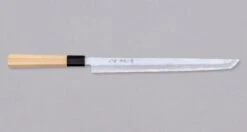
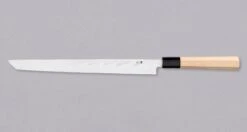
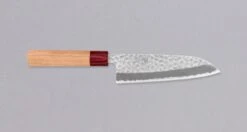
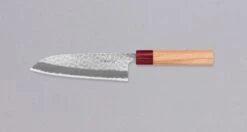
Kawamura Sakimaru Takohiki Shirogami #1 300mm (11.8″)
Original price was: $325.00.$99.99Current price is: $99.99.
- Superior Quality Goods
- Multiple safe payment methods
- Shop the Best Quality Online
- Satisfaction Guaranteed

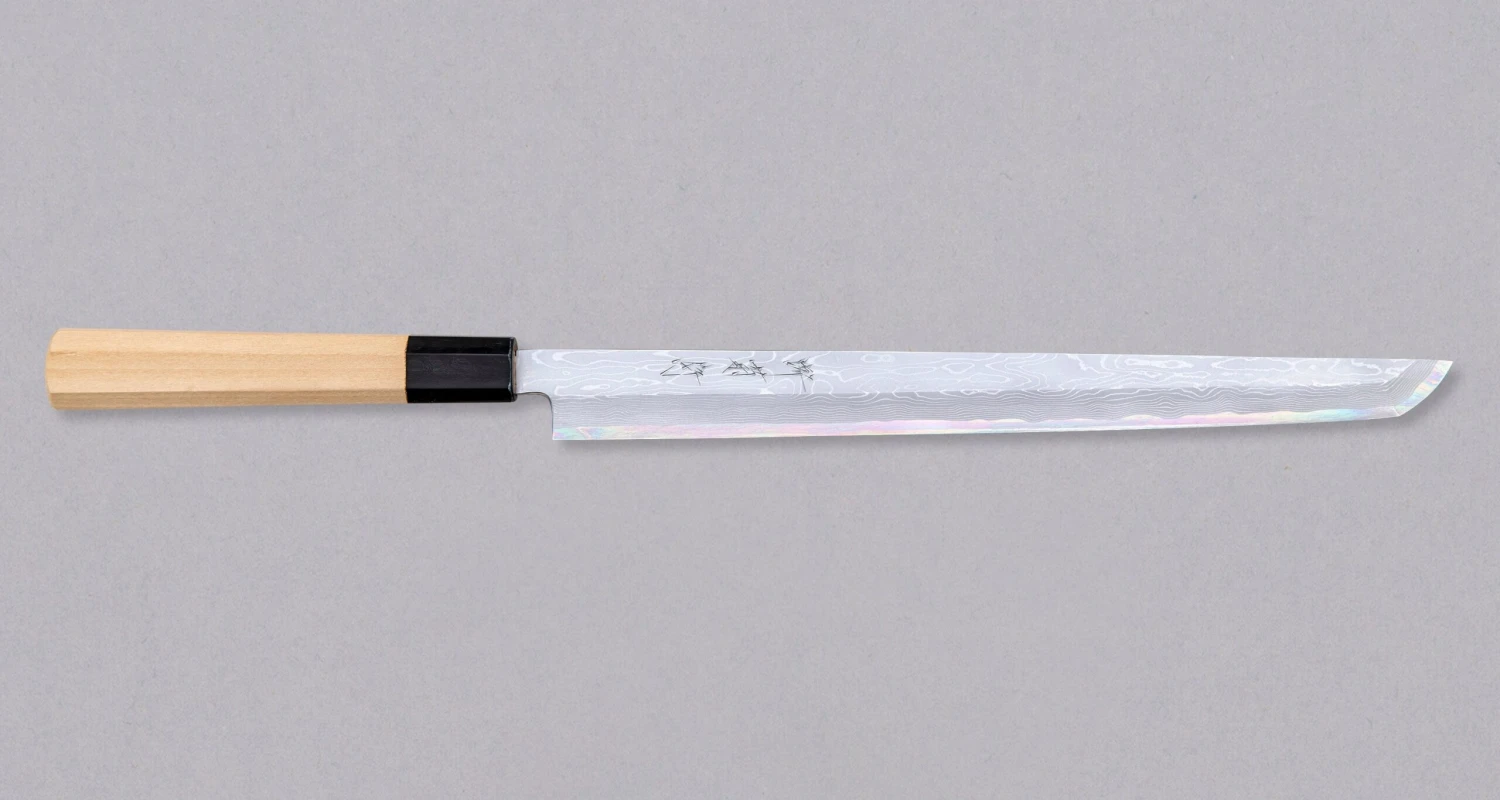
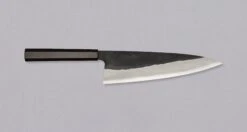
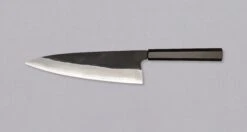
The Kawamura Sakimaru Takohiki Shirogami knife originates from one of the most famous knifemaking centers of the Land of the Rising Sun, where it was handcrafted by master blacksmiths of the Sakai Kikumori smithy and represents the pinnacle of Japanese knifemaking art. The long and single bevel blade is adorned by a stunning damascus pattern that merges over the kireha line to the junction between the hard core and the outer softer layers. The blade has a protective coating that prevents the formation of rust, which is why the knife has an iridescent glow in the light.
BLADE SHAPE:
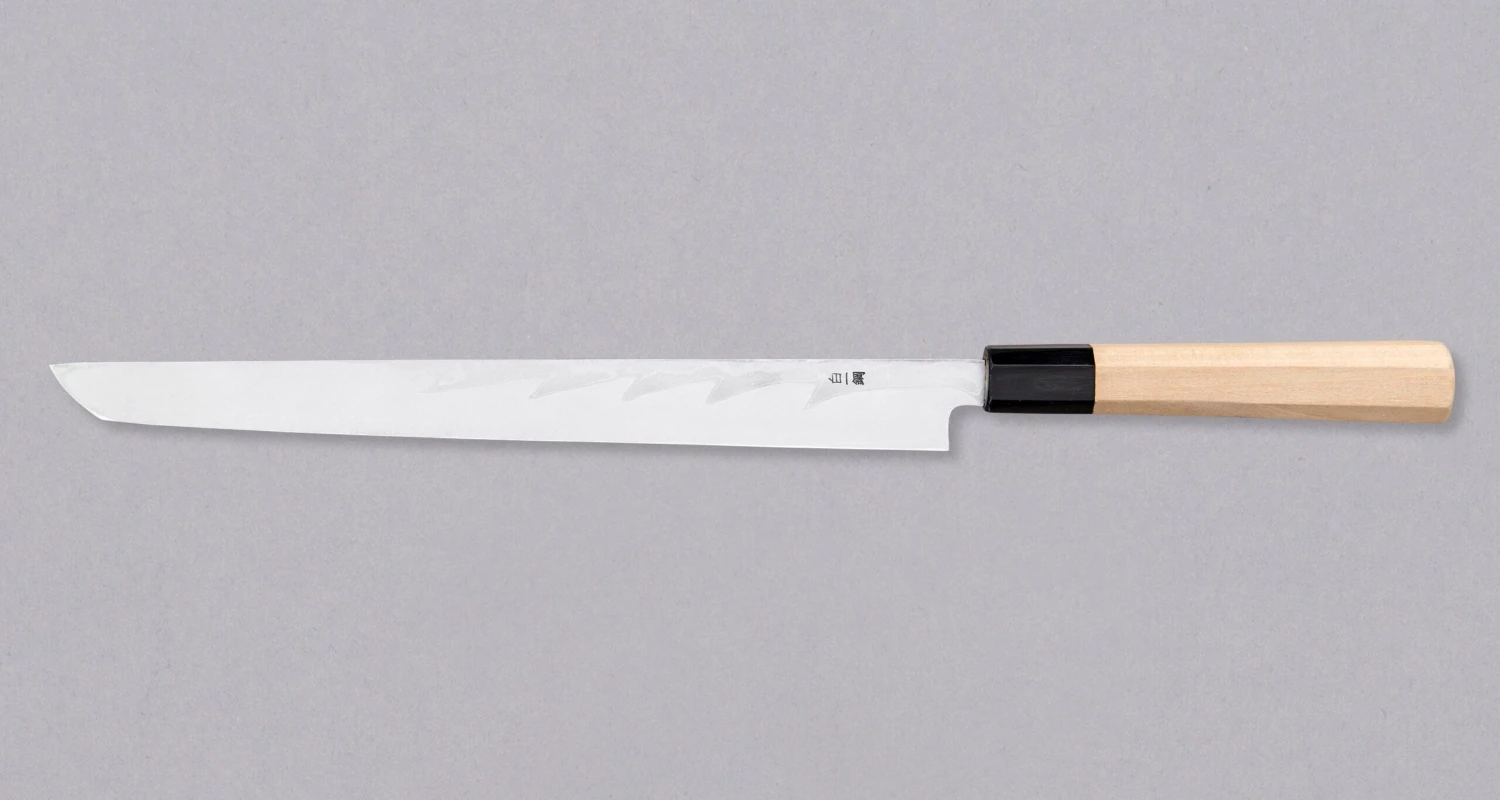
The Kawamura Sakimaru Takohiki has a narrow single bevel blade that is especially suitable for cutting thin slices of fish and meat and removing the skin from fish. Excellent for preparing sashimi and thin slices of meat (carpaccio). The blade of the knife curves sharply upwards just before the tip, and from this shape comes the name – sakimaru. The word refers to the tanto tip, which today is characteristic of takohiki knives, but in the past, this tip adorned the forerunner of modern Japanese knives – the majestic katana. The single-sided ground blade is suitable 🚨 for right-handed use only!
| Takohiki is a narrower and thinner version of the classic yanagiba with an angular blade finish. It also has a straighter blade than the yanagiba. Although ‘tako’ means octopus in Japanese, this is not an octopus knife, but is used to prepare sushi and sashimi. In the past, the takohiki blade shape was very popular around Tokyo. |
STEEL:
The construction of the blade is called ni-mai (meaning “two layers” in Japanese), which means that the blade consists of a hard cutting edge (hagane) and a softer outer layer (jigane). The hard core is made of Shirogami #1 steel (also called White Steel, which is one of the most valued high-carbon steels – we recommend regular oiling of the blade – see Knife maintenance). The jigane cladding consists of several layers of steel that form a beautiful damascus pattern in the shape of raindrops (see the article Blade Construction: Blade Finish).
→ Want to learn more about blade construction and lamination? Read our articles Blade Construction: Geometry and/or Blade Construction: Lamination.
HANDLE:
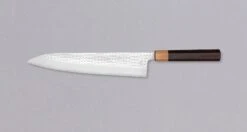
The blade is fitted with an octagonal traditional Japanese handle, made out of magnolia wood and a buffalo horn ferrule. The combination was carefully chosen – the difference in colors is very subtle, resulting in an elegant look.
ABOUT THE BLACKSMITH:
Sakai Kikumori has been producing kitchen knives with skilled craftsmen since 1925. The chef’s culture has been supported by the creation of traditional knives in Sakai, a town known as the home of kitchen cutlery in Japan. Kikumori smithy is considered one of the best knife makers in the region.
Be the first to review “Kawamura Sakimaru Takohiki Shirogami #1 300mm (11.8″)”
Related products
![Tsunehisa Gyuto Aogami Super Kuro-uchi 210mm (8.3") [Rosewood-Cedar]](https://www.sharpedge-shop.com/wp-content/uploads/2025/11/410103111038-_1__rosewood-247x132.webp)
![Yu Kurosaki Gyuto Senko R2 270mm (10.6") [Rosewood]](https://www.sharpedge-shop.com/wp-content/uploads/2025/11/KurosakiGyutoSenko270mm_410103201222_1-247x132.webp)

Reviews
There are no reviews yet.